
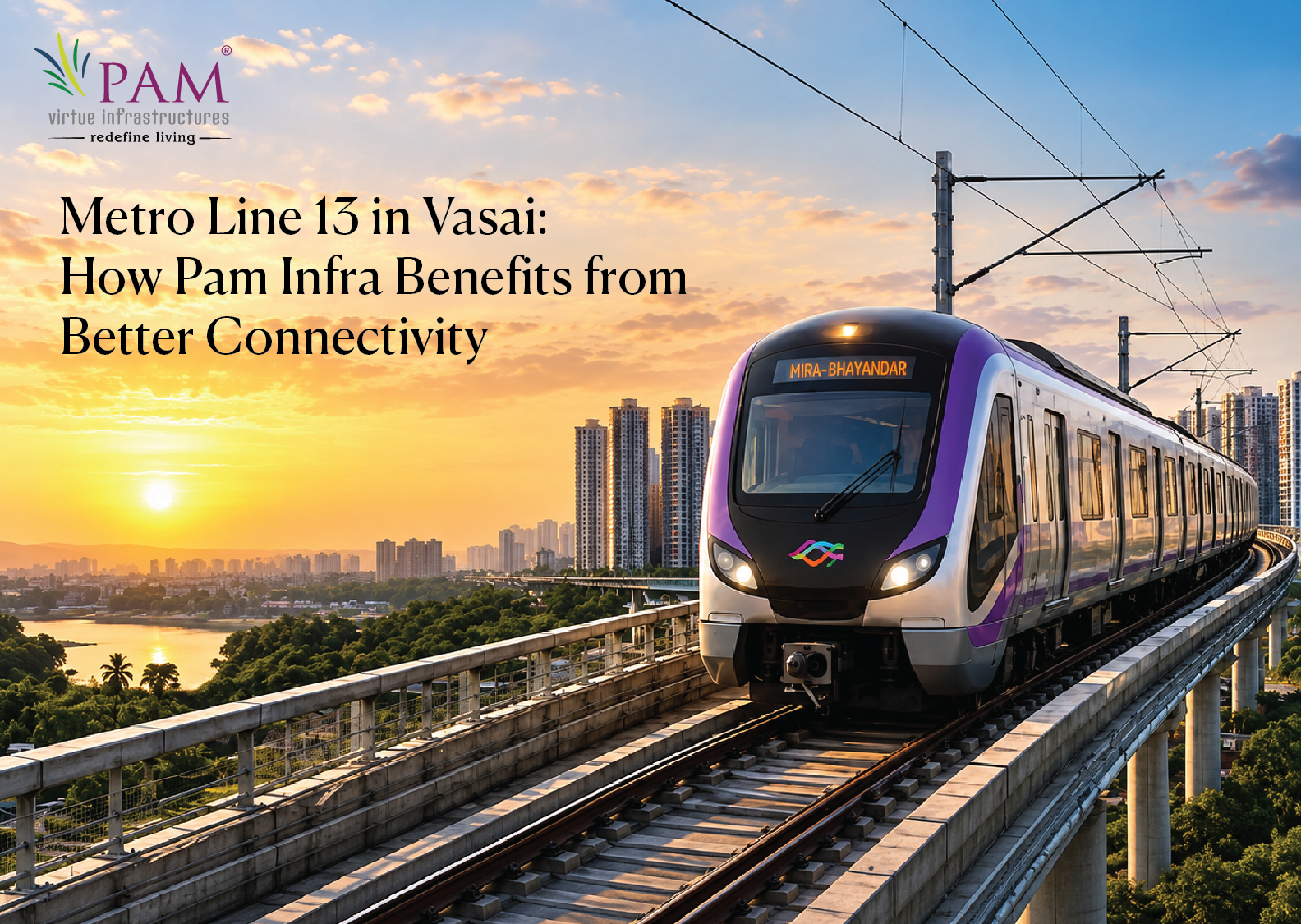
Vasai is steadily emerging as an attractive real estate destination in the Mumbai Metropolitan Region (MMR). With expanding infrastructure, improving transportation networks, and growing residential demand, the region is gaining attention from homebuyers and investors. One of the most significant proposed developments is Mumbai Metro Line 13, which could transform connectivity between Vasai, Virar, and Mumbai’s northern suburbs.
For developers like Pam Infrastructure, improved regional connectivity presents an opportunity to serve buyers looking for well-connected homes and convenient urban lifestyles.
Let’s explore how Metro Line 13 could influence Vasai’s real estate landscape and contribute to the region’s long-term development.
What Is Mumbai Metro Line 13?
Mumbai Metro Line 13 is a proposed metro corridor connecting Shivaji Chowk in Mira Road to Virar. According to the Mumbai Metropolitan Region Development Authority (MMRDA), the corridor is listed at approximately 23 kilometers in its metro network overview.
The project is intended to strengthen public transportation across the northern Mumbai metropolitan corridor, including areas associated with Vasai and Virar.
Once developed and operational, Metro Line 13 could provide residents with another public transport option alongside the existing Western Railway network.
However, the corridor remains a proposed infrastructure project, and its final alignment, station locations, construction milestones, and operational timeline should be confirmed through official announcements.
How Metro Line 13 Could Improve Connectivity in Vasai
Connectivity plays an essential role in determining a location’s residential appeal. For many Vasai residents, daily travel involves suburban trains, buses, and road transportation.
The proposed Metro Line 13 could complement these existing options and improve regional accessibility.
1. Better Connectivity with Mumbai’s Northern Suburbs
One of the biggest potential advantages of Metro Line 13 is improved connectivity between Virar, the Vasai region, Mira Road, and the wider metro network.
An additional transport corridor could make travelling between residential neighbourhoods and commercial centres more convenient.
For professionals working in Mumbai’s northern suburbs, improved transport options may also make Vasai a more practical residential choice.
2. More Convenient Daily Commuting
Daily commuting is a major consideration for homebuyers in the MMR.
Metro Line 13 could provide an alternative to existing transport routes, potentially reducing dependence on crowded roads and selected suburban rail journeys.
Actual journey-time benefits will depend on the final station network, interchanges, service frequency, and last-mile connectivity.
Nevertheless, improved public transportation could support more comfortable and predictable daily travel.
3. Improved Access to Essential Facilities
A well-connected residential location allows people to access workplaces, educational institutions, hospitals, shopping destinations, and recreational facilities more conveniently.
If Metro Line 13 integrates effectively with existing transportation services, residents across the Vasai-Virar region could benefit from easier movement between important destinations.
This could strengthen Vasai’s appeal among families seeking a balance between everyday convenience and residential comfort.
Impact of Metro Line 13 on Vasai’s Real Estate Market
Infrastructure improvements often influence how homebuyers evaluate emerging residential destinations.
Vasai already attracts interest because of its comparatively accessible property prices, railway connectivity, and established social infrastructure.
Metro Line 13 could further strengthen these advantages.
Increased Residential Demand
Better connectivity can encourage professionals and families to consider locations outside Mumbai’s expensive central residential markets.
As transportation options improve, homebuyers may explore properties offering comfortable living spaces, modern amenities, and access to essential services.
This shift could support additional residential demand in well-connected parts of Vasai.
Potential for Long-Term Property Appreciation
Transport infrastructure can positively influence property demand and market attractiveness over time.
Properties located near convenient transport connections may become more desirable, particularly when supported by schools, healthcare facilities, and commercial establishments.
However, property appreciation is not guaranteed. Actual returns depend on the project’s location, prevailing market conditions, construction quality, buyer demand, and completion of planned infrastructure.
Greater Interest from Property Investors
Investors frequently assess upcoming infrastructure when identifying locations with long-term potential.
The proposed Metro Line 13 adds another development to Vasai’s infrastructure outlook.
For investors, considering projects by established developers such as Pam Infrastructure can be part of a broader evaluation involving location, pricing, regulatory approvals, and future market demand.
How Pam Infrastructure Could Benefit from Metro Line 13
As Vasai continues to develop, Pam Infrastructure is positioned within a real estate market that could benefit from improved transportation and growing residential interest.
The proposed metro corridor presents several potential opportunities for the brand.
1. Stronger Location Appeal
Connectivity remains one of the most important factors influencing property decisions.
If Metro Line 13 improves travel options across the region, residential developments in accessible parts of Vasai may attract greater interest.
For Pam Infrastructure, this could strengthen the appeal of homes that already offer convenient access to existing neighbourhood facilities.
2. Attracting Modern Homebuyers
Today’s homebuyers look beyond apartment layouts. They consider accessibility, lifestyle amenities, neighbourhood development, and long-term convenience.
Pam Infrastructure focuses on residential developments designed around evolving lifestyle requirements.
Better regional connectivity could complement this approach by making Vasai more attractive to professionals, working couples, and growing families.
3. Supporting Long-Term Residential Growth
Improved transportation can contribute to neighbourhood development by encouraging residential activity and demand for local services.
As Vasai evolves, Pam Infrastructure can continue addressing the requirements of homebuyers who prioritise well-planned living spaces and established community infrastructure.
Any direct benefit to an individual property would depend on its actual location and access to the completed metro network.
Metro Line 13 and the Coastal Road: A Broader Connectivity Transformation
Metro Line 13 is not the only infrastructure development influencing Vasai’s future.
Proposed road improvements across Mumbai’s northern corridor could also strengthen accessibility and support regional development.
While metro connectivity focuses on public transportation, road infrastructure offers additional travel options for private vehicles and commercial movement.
Together, these developments could make Vasai a more connected residential destination.
To understand another important infrastructure initiative, read our detailed article on How Is the Coastal Road Benefiting Vasai?.
The combined potential of improved road networks and public transportation makes Vasai an area worth monitoring for long-term residential growth.
Why Vasai Remains Attractive to Homebuyers
Even before future metro developments are completed, Vasai offers several existing advantages.
The region benefits from Western Railway connectivity, established residential neighbourhoods, educational institutions, healthcare services, and shopping facilities.
Compared with several central Mumbai locations, Vasai also offers opportunities for buyers seeking comparatively affordable housing.
Future infrastructure projects such as Metro Line 13 could add to these advantages, provided they are implemented successfully.
For homebuyers evaluating Pam Infrastructure developments, the most important approach is to consider both present-day convenience and future connectivity potential.
Conclusion
Metro Line 13 in Vasai represents a promising proposed addition to the Mumbai Metropolitan Region’s transportation network.
By potentially improving regional accessibility, offering additional commuting choices, and supporting residential demand, the corridor could contribute to Vasai’s long-term growth.
For Pam Infrastructure, these developments may create opportunities to connect with homebuyers seeking quality residences in an evolving urban destination.
While infrastructure timelines and property appreciation remain uncertain, Vasai’s existing amenities and proposed connectivity improvements make it a location worth exploring.
Discover residential developments and learn more about the brand at Pam Infrastructure.
Frequently Asked Questions
1. What is Metro Line 13 in Vasai?
Metro Line 13 is a proposed Mumbai Metro corridor connecting Shivaji Chowk in Mira Road to Virar, intended to improve transportation across the northern metropolitan region.
2. Will Metro Line 13 increase property prices in Vasai?
Improved metro connectivity could support property demand and long-term appreciation, but actual price movements depend on infrastructure completion, location, and market conditions.
3. How could Pam Infrastructure benefit from Metro Line 13?
Better regional connectivity could improve Vasai’s residential appeal and attract more homebuyers to developments by Pam Infrastructure.
4. Is Metro Line 13 operational?
No. Metro Line 13 is a proposed corridor. Buyers should consult official MMRDA updates for its latest approval, construction, and operational status.